Friday, August 28, 2015

A Bug's Life (In Heels): One Girlie-Girl's Shuddering Road to Acceptance

Bugs are so gross. You know what's gross? Bugs. You know what's grosser than gross? Probably a bigger bug. You know what's the worst? I don't know, probably a huge freaking insect that just feels entitled to come out and like, check items off its gross little bucket list by dive-bombing a human's face (mine) or crawling up a human's glove (also mine) or just sit there being obscenely huge and gross and scuttling tiny gross legs within reach of a human's patent leather stiletto (also, alas, mine).
I'm sorry, I'm going to need a moment to go and wash out the inside of my brain so I can never remember this shoe. 
I am at odds with bugs.

I was excited to put out cauliflower this year since I'd never tried such an ambitious vegetable. (I'd like to take credit for success with my tomatoes but last year one literally grew in the dirt next to the pot without every having been planted. And produced. So.) I wondered how long it would take for the florets to form from the big healthy green cabbage-looking leaves, and I kept inspecting them, looking for those first telltale signs of white clusters. One morning when I went out there was a pale green cluster; in fact, there were pale green clusters all over all of the sets of leaves. Like nice fat little clusters. I was delighted. How had they grown so fast? I never expected them to come out green but now I was a FARMER and I knew that cauliflower comes out green. How exciting. If they grew that fast overnight they would probably double in size by tomorrow and I'd have ginormous, Whole Foods sized cauliflower heads in a few weeks. Ah, rapture! We'd be knee deep in cauli-rice (cauliflower grated on a cheese grater and cooked with cilantro and salt and pepper). I mentally set up the photo ops of myself in a lovely fitted dress holding a cauliflower head as my bouquet.

I looked closer and realized the little green clusters were looser than I'd originally realized and got really excited. Maybe each one of these little heads were going to grow into a separate floret. And with multiple clusters on each plant maybe there would be multiple heads! I was a cauliflower farmer! Maybe I could start a roadside stand like the end of the Dixie Chicks video "Goodbye Earl" and sell strawberry jam and cauliflower heads in a gingham off the shoulder top with a flattering neckline. I went inside to pull my sleepy husband out to the garden to show him my budding new business.

He peered inside the leaves. "Babe, those are aphids."

I was furious and shocked and suddenly terrified that he was right.

"No they're not," I said bravely.

He bent closer and picked at the green cluster. It came apart in his fingers, with effort, though it was still sticking to the leaf with malicious adhesion. With a cry of dismay I fell on my knees and dug through the cauliflower leaves and picked the center clusters apart. Aphids. I wailed to the heavens and tried stubbornly to pick off the aphids in hope there was something buried inside the clusters of bug bodies. Aphids. Nothing but aphids all the way through to the center. No cauliflower buds. No emerging leaves. Just a crawling, writhing, filthy pile of APHIDS living in sin with no other purpose than to devour my dreams.

Why. Why would you do that. 
I need a moment.

Bottom line, it's not been easy for me to recognize things like beneficial bugs. The very concept of that seems oxymoronic. Following the aphid-pocalypse I bought expensive boxes of ladybugs which I delicately refrigerated and carefully, lovingly, trustingly bedded amid my cauliflower plants. They blackened my plants in impossible numbers with so many many legs, for the first  time in my life I realized a ladybug was not an adorable pet but a foul swarming beetle; and then in the morning they took off, leaving the aphids all but untouched, presumably in search of the next champagne and aphid caviar bender they could hustle their little polka-dotted behinds into. Oh, aren't we SO cute. Betrayal, most foul, ladybugs. You are no lady.


Lady, my ass. 

However...

About a month later, after the sullen and resentful aphid-stunted cauliflower leaves finally withered in on themselves at last and died, I dug up their beds and went to plant peas, and noticed all the nice fat red wiggler earthworms squirming around in the half-compost soil mix I'd made. I definitely didn't want to touch them but I went and got my little poppy-print garden gloves (aha! This is what those are for!) so I could finish turning the soil without having to worry about getting worm on me and finished the job without disturbing them. The peas and bush beans I planted came up like gang busters. When I finally got ready to renovate the bed again this time I fitted the chicken run over the top and let them feast on the spent pea shoots, bean leaves, and all the worms they could dig up. When I went to turn the soil the next day, there were even more red wigglers, even after the chick-pocalypse, than I'd seen before the peas. Hmm.

My husband suddenly got all excited about something he'd read about called black soldier flies, which could supposedly chow through six inches of green compost a day (human food waste, basically) without needing any leaf or wood amendments. He started sending me links with bizarre composting contraptions and videos of what the soldier fly grubs looked like; and then with all the pride he'd had in introducing his first born to people, he announced that we. HAD. SOLDIER FLIES! YES! In our very own backyard, flies. Who could have known that this momentous occasion would strike our simple farm. It's far more than I ever dared to dream.

And they were gross. When I got home from work that day he took me out to show me his exciting discovery and shyly lifted the compost bin lid to expose the writhing heaps of soldier fly larva. Like thick, serrated, fat and stubby worms, they lay wriggling all over each other, cupped inside an orange peel.

"You're disgusting," I told him primly, and turned on my heel to head back inside.

He took a video of his precious grubs and posted it on Facebook.

Then came in sadly to tell me he hadn't gotten even one "like".

I have to admit, over the next few days I became sort of fascinated with the grubs when I realized they really were going through a half foot of waste a day and turning it into beautiful black castings for our garden beds. They were gross. They writhed and crawled over everything in the compost bin. I waited to see the adult flies, but realized I never did. The females just laid their eggs inside the compost bin and settled in to a life cycle near the renewable food source, our trash. Huh. I realized they were eating our peels and pulp and coffee grounds, and decided to stop the tedious but necessary practice of cutting up our organic trash into 1" pieces for the compost bin. Disposing of a pineapple had been hell, but now the little guys in the compost bin cleaned the rind for me completely and turned it into soil. Huh.

I started watching them. There they were, unattractive, unsightly, unassuming, but patiently taking what we would have sent to a landfill and turning into super nutrients for our garden. We'd use the dark soil they made in a bed for carrots and then give them the carrot peels to start the process again. It was...elegant. Once a week, my husband took a handful of the grubs and threw them to the chickens to scratch for, keeping the numbers from getting overwhelming, giving the chickens some extra protein, and saving us on having to buy the chicks supplements.

Yesterday I saw one that had escaped when my husband turned the compost piles and realized when I saw it sitting there that it wasn't gross at all. While it certainly wasn't cute or the kind of bug you'd hold out your hand to hold, it was compact, utilitarian, and functional. Soldier fly was a great name for these guys--they had one job and the did it ad infinitum, impossibly, genetically well. This simple black grub had earned my respect.

I scooped him up and deposited him back into the compost bin where he happily wriggled over to a carrot piece to grimly start his work.

I was surprised to find I didn't shudder at all.


Barnyard Vet in Heels

After an unseasonably cool San Diego August, with temperatures in the high 70s and some sprinkles of rain, we had a hot day today. A very hot day. My first day back teaching school and I alternated between shivering in the blasting air conditioning and dehydrating with the preposterous heat when I stepped outside. When I finally got into the car to head home at 3:30 p.m. the outside temp was 104. I had moved the chicken run this morning to a shadier spot beside the house with more grass for them to nibble, and supplied them with some nice cold pineapple and carrot pulp from my morning juice to help keep them cool during the day.

It wasn't enough.

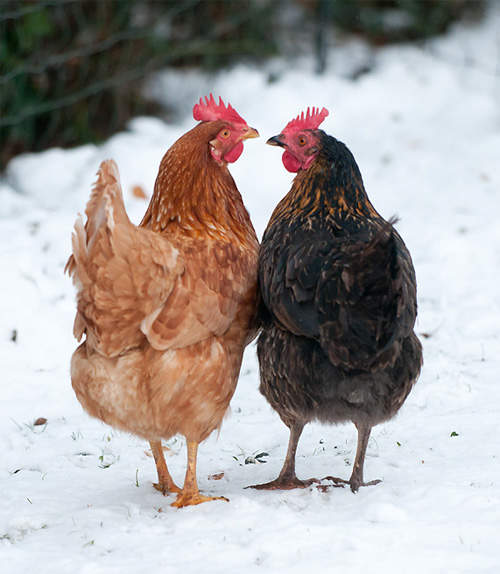
I pulled up to my house to find three little feathered heaps lying under their angled shelter inside the run. They looked lifeless. I jumped out of my car and ran over to them, clucking to them. The black and white Maran perked up her head and looked at me without getting up; the auburn Rhode Island Red and the brown Welsummer with her pretty gold quail-patterned feathers didn't move at all. When I opened their run the Maran got to her feet but didn't run away (a first for her) and let me pick her up docilely. I put her under one arm and scooped up the Welsummer and the Red into the crook of my other arm. I could feel them panting (they cool themselves like dogs do) and their hearts beating, fast as horses, but they didn't struggle or even do more than lay quietly together in my arm.

Before we even thought about buying chicks I had been like a pregnant mother, reading every single scrap of literature on chicken rearing I could get my hands on. The Storey's Guide to Raising Chickens, A Chicken in Every Yard, the chapters in Little House in the Suburbs and The Backyard Homestead's Guide to Raising Farm Animals. So as I was hurrying the chickens back to the backyard to care for them I didn't think, I just reacted.


  • Cool their feet. I set down all three chickens and sprayed down their feet with cool water from the hose to help them lower their body temperatures. The black and white Maran perked up immediately and struggled and flapped to get down. My redhead, the Rhode Island Red,  pepped up a bit and lifted her head so she could sit up in my arms instead of dangling loose. I sprayed her feet for another minute and she clucked indignantly at me. Then I turned to the brown Welsummer. Her feet just dangled lifelessly underneath her, and her mouth was gaping wide and outstretched. I sprayed her feet but they didn't seem to feel any cooler. 
  • Get them into the shade. I brought them back to their coop where it was not just shady but completely dark and put them inside. The Maran, already feeling the peppiest of the three, started walking around and fluffing her wings to cool herself. The Rhode Island Red and the Welsummer laid down immediately in the doorway of the coop. 
  • Water. Normally the chicks have a nipple waterer (a big five gallon bucket with a metal nipple system underneath that they can click for a drop at a time without getting soaked themselves) but they seemed uninterested in drinking, and I knew they were dehydrated. I brought them a small tub of ice water and dipped my fingers in to coat the tops of the Red and the Welsummer's beaks. The Red almost immediately gulped down the drops, then the next ones I dripped onto her beak, then when I dunked her beak in the tub she got it and started drinking greedily. The Maran, not the brightest of birds under the best of circumstances, came over to investigate, but of course instead of drinking like an intelligent thirsty creature, tilted her head at me curiously. I sighed and dunked her beak, too, and she was like, OMIGOD you did not tell me that this was WATER why have I been drinking from a spigot like some kind of ANIMAL. She went to town on that tub like water was going out of style. 
  • Cold fruit. I grabbed some cold peaches from the fridge and cut them up so their cool juicy flesh was exposed and threw them into the coop. Red and Maran immediately went for the fruit and tore open the fleshy center piece peck by peck down to the pit. 
By now Red and Maran were feeling good, clucking and drinking and eating freely and jumping down from the coop to peck for bugs under the coop. But beautiful Welsummer was still not moving. She lay there in a fat pile of pretty feathers, her little sides trembling with her panting, drinking the drops that I tapped onto her beak but otherwise not moving. I watched her with a critical eye, and noticed her golden eyes were dilating and contracting and dilating and contracting. This couldn't be good.

I pulled her out of the coop gently and put her on my lap with a bottle of ice for her feet. I laid her talons over the curve of the frozen water bottle with my bare thighs freezing under the painfully icy cold bottle but her feet still feverishly hot. With one of the peach pieces in hand, I was able to squeeze juice into her open beak. She nibbled the first ten or fifteen drops down but then lost interest, turning her head when I tried to tempt her with the sweet juice. I checked her feet. Still insanely hot, burning to the touch, but after a few minutes her golden eyes had stopped dilating. I switched to an ice water dish, dripping cold water into her beak with the ice bottle on her feet. After another few minutes she struggled to sit up and flapped to get down, so I set her on her feet. She made it a few unsteady steps before staggering like a drunk and falling over. 

Shit. 

Okay. I tried again. I filled a six inch deep tub with water and dunked and held her feet in the cool water, then dripped cool water over the top of her head. I dunked her beak into the water and she came up sputtering but slurped down the drops; I dunked her again and then two more times until she was slurping steadily. She was still unsteady on her feet so I picked her up and flipped her onto her back like I had when she was a baby chick, just two weeks old, and let her feet naturally curl around the ice water bottle as I held her in my lap. Her eyes rolled back in her head and her breathing stilled and she almost immediately fell asleep in my lap. When I touched her feet several minutes later they had finally started to move from oven-hot to her normal humming warmth. She opened her eyes and sat up, then struggled to flip over and sat on my knee. 

She looked up at me. I dripped some water onto her beak. She slurped it greedily then pecked my thumb. Hard. And turned a baleful eye on me. 

I felt a sudden warmth. 

The warmth spread over me like a font. 

It was not my heart, in an outpouring of tenderness, but the Welsummer releasing the last of her feverish heat with a truly alarming quantity of hot, watery chicken poo all over my leg. She shook herself and clucked at me, indignantly. 

Sigh. 

I'll just go inside and change my shoes then. 


Sunday, August 23, 2015

Seed Savers

I always get carried away buying seed packets. It's hard to think about something that will literally grow at a slightly-faster-than-snail's-pace as being exciting--still, the bright colors of the beautiful mix of flowers on the cover, the interesting tomatoes you've never tasted or even seen in a store, the gourmet herbs from Italy and France carry little grains of hope inside their envelopes. Packet of sunflower seeds and you can automatically envision fields of the bright yellow blooms, emptying their bowing heads into your waiting hands at the end of the season to just pour out their seeds for you to roast and stuff into your mouth. Packet of corn and I suddenly realize I'll never need to buy corn again, not ears of roasting corn or popcorn or corn for corn flour because I will now have a cornfield in the corner of my backyard. Lettuce? Eggplants? Hops? Lemon basil? Purple sage? Holy lord. With seeds you can have anything you want in your garden without being at the whim of what seedlings the nursery keeps in stock.


This year was no exception. I walked into the nursery in April and absolutely lost my mind. I bought seed packets for butter lettuce, alpine strawberries, cilantro, green beans, nasturtiums, runner beans, loofah gourds, swiss chard, torpedo onions, baby kale, and basil, on top of the six packs of seedlings I bought of cauliflower, broccoli, butternut squash and roma tomatoes.
I had ten times as many things as I needed, especially since I had three packets of different pumpkin seeds, corn, green beans, and all kinds of flower seeds from last year. I mean, seeds are literally a little packet of potential, and $3 a packet seems a small price to pay to hold a little potential hope in your hand...except of course those packets add up...


That'll be $947.
So one of my goals this season was to find out exactly how to save seeds from as many things as possible, and decrease my overall costs for the endless question people always seem to have, "How much are you saving on your food now?" What I was most surprised to learn was that you can't always just dump the seeds right into your hand and put them into the ground; and that not all plants that should have seeds do have seeds. A hybrid plant (most often something like a tomato) doesn't create seeds or if it does they won't be true to the parent plant. That's one of the reasons people make the choice to use heirloom seeds: they're always open pollinated (meaning, they can spread their seeds on their own by wind or by pollinators). And a lot of plants, heirloom or not, have specific recipes for success for collecting their seeds. For example:


Lettuce: It's so damn cool. Basically as soon as the weather warms up too much or the lettuce is done growing, it goes to seed with these little obelisks. To protect itself while its putting its energy into seeding, the plant emits a bitter chemical into the leaves making them taste, you guessed it, super bitter. The lettuce that was a normal looking head will sprout up two or three feet into these tall towers and at the very top are some little yellow flowers. 

Seeds: the yellow flowers on any kind of lettuce need to be pollinated and the seeds inside need to dry; so although there are seeds inside the flower heads almost as soon as they emerge, they are ready to be harvested when the yellow flowers turn into a fluffy white chaff like a dandelion that's gone to seed. It's the perfect little package, so super elegant--yellow flowers particularly attract bees; then, left to its own devices, the flower pod would dry and float on the wind using the white chaff, spreading the seeds in all directions so as not to compete with each other. Once the white fluff has appeared you can pop off the heads carefully and roll them between your fingers to find 15-20 seeds. 

  
That's right. A packet of lettuce seeds--in this case an Heirloom type that I paid $3.25 for--has maybe 100 seeds. Just one of those seeds can turn into a tower like you see below, with hundreds of flower heads on it once it goes to seed, and come out with thousands of individual seeds. 

Tomatoes:You'd think, since tomatoes are a fruit with very visible seeds, harvesting them would be a piece of cake, but most sources say that fermenting tomato seeds is the best way to separate out highest quality and most viable seeds from an individual fruit. It also makes a lot of sense. Hopefully you've chosen the reddest and most juicy fruit, or maybe the biggest fruit; in any case, the one you want to eat--so presumably you want more fruits just like that one. 

Seeds: the nice thing is that you can save tomato seeds right from a fruit that you're eating. Heirloom tomatoes or Romas (technically not considered an heirloom, but an open pollinated variety) can be cut in half and the seeds and the gel they're suspended in squeezed out into a shallow dish or cup. This worked really well for me when I was drying the roma tomatoes for sun dried tomatoes. Add 1/4 cup of water to cover and leave the mixture for a few days. A scummy layer will form (perfectly okay) as the seeds separate from the goo; the good seeds will sink to the bottom, the unripe or unviable seeds will stay in the scum at the top. This also helps separate out seeds that might carry disease or fungus. After the seeds are completely separated you can take a spoon to lift out the scum and add more fresh water if more gel remains. After a week the good seeds are easy to see. Drain and dry on a paper towel, then store in a dry place. 

Green Beans: Seems easy since you open up a green bean and there is literally a pod of bean seeds just sitting there. Except if you've ever tried to plant a green bean while its still green? You know there's a little more to it. 


Seeds: At the end of the harvest season, leave the biggest healthiest plant with all its beans. It'll take between a month and six weeks for the beans to wither and shrivel into pale tan seed pods that you can easily snap open and shell. Inside, the once green bean seeds have hardened and turned a deep purple brown much easier to store. 

Sunflowers: Another plant that seems obvious but which actually takes much longer to get to harvest than I expected. The heads have to completely fade; then the pollen dries and turns into a brown fluff that you can brush aside with your finger. The seeds will turn from white to striped black and white to completely black. 

Seeds: Once the seeds are totally black, just take a bowl to catch the seeds and run your thumb over the seed heads. The seeds should just fall easily from the head (if not, leave the flower to dry longer). A good rule of thumb is if the back of the head is brown and dry the seeds are loose enough to harvest. If you don't like the look of dead sunflowers hanging around, you can cut off the top 12" of the stem with the head attached and hang the stems to dry upside down with paper bags tied around the heads to catch any seeds that fall prematurely. 

Of course you can always roast these seeds with salt and eat them instead of replanting!

Over the course of my season of seed saving this year, from each planting that I started from a seed packet, I got an exponential return. I'd estimate that from this season alone I saved enough of everything I planted to seed three or four whole beds of the same with plenty left over to give away packets of the same seeds to everyone in the neighborhood. Not only am I going to save at least $100 in seed for next year, I can actually expand my garden by two or three times with no extra cost at all. 

Saturday, August 1, 2015

Awkward Bombshell tries to Neighborhood

My neighbors keep, like, stopping to talk and I don't really know what to do with that.
Hi! This is totally not awkward. Welcome to my yard.
Ironically, before the water restrictions from the drought encouraged me to go apocalypto on my lawn, I never really spent any time out on the front yard. The perfectly green lawn was watered automatically and mowed and edged by manlier hands than mine so no need for me to do any gardening; and despite its cool green carpeted visual appeal, it seemed a little odd to pull up a lawn chair in the grass and just like...what...sit there or something? There is exactly zero percent of that going on on my street, except of course for the crazy/wise? person who last summer came and spread a blanket under my trees to have a picnic with her baby on my lawn.
Can you not?
I mean, actually what are you doing right now, just...having a picnic on my lawn? This is not a public park! There is actually, ACTUALLY, a public park like two blocks from here. THIS? Is my lawn omigodpleasedon'tstabmeinthehead....
Honestly I go out into my front yard so little that I recently went a block party two doors down from my house. My neighbor looked at me strangely before handing over my paper plate ticket to the potluck-buffet pasta-salad extravaganza and asked me if he could help me. I smiled awkwardly and said oh, I live in the white house on the corner. (subtext: I am not a crazy baby-picnic people's lawn-sitter, I didn't just stop in here for the questionable food and the company of strangers who I have nothing in common with and who will ask me for the one millionth time whether teaching music is like being on Glee because NO; I  can go get my astro-bright neon invitation you put in my mailbox so I can prove that I came here to build community. With you strangers.) He laughed even more awkwardly and handed me my plate. "Oh," he told me. "I always thought that guy lived alone."

Hmm. Note to self. Sit in grass on lawn more often.

But of course this year we made some major changes, one of which was to actually save water by putting in a handful of raised beds and dwarf citrus trees in the front yard and letting the lawn die; and saving rainwater to water by hand--so I'm out in front a lot hauling water cans. And of course there was one major change to our landscaping this spring.
"Are they talking about us right now?"
"Gurrrrl, how could they not. Shake a tail feather."
God.

When I spent about a month doing some hard digging and hand tilling to move all my rosebushes to the front yard, a smiling, coiffed middle-aged lady walking her pug said "Starting to look better!" I looked up at her with barely concealed fury. Is it? Is it "starting" to look better? Is the fact that I am covered in clay loam from head to foot and have eight broken nails beginning to meet your expectations of my yard? I mean thank you for letting me know it's not looking good yet but that it's starting to look better. Yay! Neighborhood! 

When we let the lawn die one of our older neighbors across the street came over to watch us, his hands on his hips as he surveyed the wasteland with an emotionless expression. "Huh. Think I liked it better the way it was." Oh did you? Did you?!

A lady stopped by to demand to know what was going on with my neighbor's car, a junked out jeep he's got in his driveway. "That is an EYESORE! What are you doing about it? Where is our homeowners association? We need to complain to the civic association. I didn't spend my whole life saving so that I could have a house in a neighborhood like THIS! We can't continue this way with our neighborhood being turned into a JUNKYARD and a DISGRACE!" I looked back at my dead lawn and thought about the bale of chicken wire I had in the garage. 

I hate people.

But when we put in our raised beds and recognizable squash vines started to sprout, people started stopping to talk. Not to do this awkward "I make a comment in the hopes of starting a conversation and that way we can pretend we have a neighborhood community" small talk, but actual TALK. "You've got some squash growing in there!" a couple called to us from the sidewalk. "What else is in there?" They stepped onto the lawn and came over to see. "Ooh, pumpkins too? That's just great! What kind, Big Macs? They just grow like crazy don't they?" And then the man told us how they'd had fifteen raised beds in their back yard at the end of the street for the past twenty years, quietly growing squash and pumpkins and cucumbers. The wife smiled uncomfortably and tugged at him to come along with an expression that told me she was worried about boring us young people, but I was more taken aback with how nice they were. That was, like, a real conversation. 

And when we started work on the chicken coop, the neighbors really came out of the woodwork, so to speak. There must be a silent alarm bell on the street when a girl uses power tools that rings at a frequency only suburban men can hear. They all came over to see "Whatcha got going on over there?" Meaning, of course, "Do you want me to do that for you?" and "Sorry, I just came over here to see whether it really was you running that power saw. You ARE! Lookit that." They wanted to know what I was building and how it was going to get put together and what it was for, and then gaped in delight at the box of chicks. "Look at that. LOOK AT THAT. I've always wanted chickens. How much work are they? They don't smell. That's so strange! I always thought they smelled. And do they make any noise? Not really, huh?" Again, I was startled. No judgement. 

Three gleaming ladies in their Coldstone Creek casuals stopped by yesterday, walking their purebred golden retrievers and immaculately groomed akitas. They paused at the sidewalk while I was feeding the chicks some watermelon and stopped as one hive mind. 

"Look how big they're getting!" the leader exclaimed. "I think they've put on another pound, haven't they?"

Awkward face. Why do you know about my life and my chicks? Why?! Who sent you?! What have you heard?! Brace for impact. Here comes the burn.

"I was so excited when I found out we could have chickens in our neighborhood!" the next one said with a  brilliant smile. "We all were!" 

"Oh yes. We were so disappointed when you moved the chicks into the backyard. We look forward to seeing them every time we take our walk! Are they easy to care for?"

Inexplicably I found myself talking about the chicks. Yes they were easy to care for, like a parakeet. Just feed. No they didn't make any noise, or have any smell, and yes they ate just about everything including caterpillars and snails from the garden and the new grass from the unexpected summer rain. 

"Well, I for one can't wait to see them just keep getting bigger. I'm bringing my grandchildren over here tomorrow to come and look--if that's okay." The leader smiled at me warmly, like we were neighbors having a normal conversation. Ay. Like, more, just...talking to people? And we're all going to pretend this is normal and we're, like in some Minnesota small town where we...like, know each other? 

I heard myself say yes, and laugh, and make a joke about starting an egg stand once the chicks were laying. Delighted, they made me promise to do just that and walked off in a cloud of cheerful goodbyes and Michael Kors perfume. 

What is life right now. Urban farming grows community? I'm not sure if I'm ready. 

Thursday, July 30, 2015

A Garden that Feeds Itself

Dan Barber is one of the mentally sexiest people I can imagine. I could just listen to him talk all day. His Ted Talks "How I Fell In Love With a Fish" and "A Foie Gras Parable" are word porn, pure and simple, all seduction and sensuality. He talks about a lagoon in Spain that is so pure that the water from the sea floods in and washes out cleaner than it entered; a lagoon so rich in fresh, fat, succulent fish that flamingos fly 100 miles each day to feast on the banks before returning home to their nesting grounds; a system so flourishing, so healthy, that the fish taste like the ocean itself. He talks about a goose farm that is so abundant with figs and olives, with tasty herbs and peppery berries, that the goose flesh doesn't need to be seasoned even with salt or pepper; that the geese don't need to be force fed to produce foie gras because they are already waddling fat and sassy; and delighted with themselves and the garden of Eden the farmer has created, the geese actually call to the wild geese that fly overhead and the wild geese fly down to stay. 


The face of pure joy.

It's emotional, to think that those things exist. It leaves me on the verge of tears and makes me want to know where I can buy that fish that tastes like the ocean; that goose crackling with the fat of olives and figs and a happy healthy life. It stirs something in me, deeply, and the common thread is this: a closed ecological system.

We industrial age Americans are so far removed from this idea that we only vaguely remember it in the most forgotten and buried parts of our subconscious--the struggle to be caretakers of the land. We knew it once, or someone did--we all learned about how the pilgrims were taught to plant fish with their seed corn to feed the land (although history disagrees about whether Squanto himself learned this from the Spanish or whether this was ever common practice for Native Americans). It's centuries gone, that practice of hunting only what you can eat; harvesting  but leaving some for seed; leaving the dead plants to grow wild so their leaves fall and fertilize the soil, so their hollowed stems collect water for butterflies and make egg chambers for wild bees. It's centuries gone, but when we remember, when we rediscover, when we stumble upon it, there's something in our ancestral memories that stirs, that makes the feeling of contributing to a closed system so healthy it can feed itself...satisfying.

I'm a long way from permaculture (the practice of fully sustainable farming) in my backyard. I take baby steps. This spring we started composting and I was startled how quickly those bins filled up, and then compacted down again, and filled up again. Apple cores, carrot peels, pulp from the juicer, paper towels, cardboard all disappeared into the bins and when left alone produced pounds and pounds of deep, rich, velvet black stuff, soft as crumbled cake, richer than the best compost you can buy in the nursery. Compost went into the tomato bed and the tomato plants exploded into red rubies, Romas as big as small pears, bursting with flavor, dripping from the vines by the bowlful, far more than we could eat. The plants spent, the vines and the leaves got chopped and mixed back into the soil where they withered and decayed and turned the soil darker, richer.

We started collecting rainwater and watering our plants with that. Rich with compost, the green beans flourished and bloomed with their tiny violet and white flowers shaded by spade-shaped leaves; the beans fed us, their snapped off ends feeding the compost bins; we ate what we could and left the rest on the bushes to go to seed. The green beans shriveled and browned and burst open, filling our hands with shiny aubergine seed beans, ready to be saved in envelopes for next season. Sunflowers bloomed and shed endless fat grains of pollen all over their enormous leaves, drawing bees by the dozen; they slowly drooped and dried, their seeds slowly turning from creamy white to striped to glossy black and tumbling from their heads when you ran a fingertip across them. The decapitated stalks, hollow, stand waiting for wild bees to lay their eggs inside for spring. Heirloom lettuce, growing unchecked and abundant in a compost-soil mix, gives us far more salad than we can eat, and the unpicked stalks grow into tall, thick obelisks; they darken and grow bitter as they set flower and set seeds for the next crop. I let the mushrooms that insisted on coming up in one of my vegetable beds flourish and they broke up the soil and fell back into it, leaving the ground crumbly and rich; we added earthworm castings and found hundreds of them (and their babies!) in the soil after only one season.

We plant for pollinators, nasturtiums and geraniums, expecting bees but finding butterflies and birds. White butterflies sleep under the cream and green striped nasturtium leaves and flutter up drunkenly in the morning when I sprinkle the beds with rainwater; the birds peck the hill behind our house clean of the crumbs from the heels of stale bread I leave for them and clean up the beetles and caterpillars that would nibble at the lettuce and broccoli leaves, left unchecked. Hummingbirds feast on the fruit flies that gather at the compost pile, darting around merrily until nothing remains. The chickens gobble down crab grass and spurge and carrot pulp from the juicer; scratching up pincer bugs and grubs and caterpillars and laying down rich manure that dries into a golden dust and decays back into the soil. Their eggs when they lay them will feed us, and the shells go back into the compost to add much needed calcium for the vegetables. Dried and crushed the shells will keep slugs out of my strawberry beds.

It took the Spanish goose farmer generations to create his beautiful fig and olive orchard, a food forest with an understory of saline plants and pepper berries and rosemary, to sustain his flock of half-wild geese not only ecologically but exceptionally. I know it'll take a long time to return my lawn to the kind of soil that can sustain and produce food, and it won't be a single application of fertilizer, it'll require continuous care and hard work. But as I look out into my garden, grown wild with geraniums and sunflowers, alive with butterflies and bees, I see patches of soil rich and loamy with years of crumbling leaves left to mulch, lettuce and beans setting seed in the hope of next season. It is deeply satisfying. I will never have a fish farm alive with pink-breasted flamingos but I'm inspired, like Dan Barber, by the taste of what we can grow when we care for the land--the sweetest and most explosive strawberries, the most delicious and potent blueberries, and a garden that can feed itself.

Tuesday, July 21, 2015

BACK AWAY. FROM MY CHERRIES.

Dear Grocery Clerks of the world,
You don't need to check me and my cherry habit. I realize I have an unreasonable amount of cherries on the conveyor right now. Yes. I am actually going to eat nothing but cherries for dinner. I. LOVE. CHERRIES. I love them. Okay? And sadly for me they have a two month season. Not a two month season like strawberries where you can get them all year but they're really best at a certain time? Two months, period, and they're gone. Ten months of no cherries. So the answer to your flip query, "got enough cherries there?" Is NO. NO, I DO NOT. "Do you know how much those cost?!" Yes. Yes I do. Same as a big carton of cigarettes you just sold that truly unhealthy looking sofa cowboy. Why you no stop him and say "hold on, I'm sure you don't want this much at THAT price. Want me to put one back?" Put one back?! I will beat you with my keys if you try to put my cherries back, and I'm a public school teacher. I have a lot of keys. These cherries are my happy hour except instead of ruining my liver they brighten my complexion. You want to know why they're $10 a pound at the height of the season? Because they're rad. No one would ever dip summer sweet Bing cherries in chocolate or use them as a garnish or bake them into a pie or make jelly with them because that would be stupid. You don't add anything to these perfect morsels of perfection, you eat them, NOW, until you make yourself sick. 
Feeling empowered to go buy cherries? Go now, NOW, the season is ending! Run, girl!

I wish my name was Cherry. Then maybe people would stop hassling me when I eat cherries or asking me to share my cherries. DO I LOOK LIKE YOUR MAMA, I AM NOT HERE TO SHARE CHERRIES WITH YOU MOOCHERS.
Okay? I want the cherries. Thank you for your interest in my life, you all, and I appreciate your concern. Now piss off. 

Namaste.
Turn, walk away, eat cherries. Repeat. 

Saturday, July 18, 2015

It's All Easy When You Have Dry Socks

The last time a true, drought-ending El Nino storm swept through California, I was a student at Cal Poly San Luis Obispo; the campus is vast and hilly and horribly prone to lake-like puddling, particularly if it rains for nine months straight, which it did that year. Cal Poly also simultaneously prides itself on having the highest General Ed requirements of any Cal State university in the system and at the same time has no hallways connecting any buildings of different disciplines. Which meant that even if you happened to be foolish enough to take a full course load that year (and I did) you would still need to leave your main college building to get to your general ed classes at least once, if not three times a day. I walked in the rain. A lot.

In my freshman year I had made some attempt to look cute at school but during that El Nino year I absolutely abandoned vanity. If you had to traverse between any two buildings across campus it was not about carrying an umbrella, it was about wading through puddles far deeper than any rain boots could protect you from, and I couldn't stand wet shoes, wet socks, wet jeans. I took to wearing shorts and trudging barefoot straight through the puddling thoroughfares, carrying my Birkenstocks, and wearing a huge tarp/poncho that had instructions on the tag for use as a tent. I was an enormous yellow entity of puddle slogging. With my tent/raincoat over my bulging backpack and my bare feet I looked like a monstrous chick-creature stalking the university waterways. 

At some point in this miserable year, my friend Sam said "It's still raining, huh? Welp, we shore need it." 

I just about lost my mind. 

"Are you crazy? I haven't been dry SINCE SEPTEMBER. I go home at night and take a hot shower just to thaw out and then still can't get dry. It takes me all night under arctic blankets to just warm my feet up and I think I've had the same sticky cold for about four months now. I've given up doing my hair since it just gets soaked or frizzes up or dries under my hood. I am cold and wet and to be frank I AM ALL DONE WITH THE RAIN." 

He kind of cringed.

"But we're in a drought."

Standing in my wet clothes with my wet hair and my wet feet, shivering in the damp, Vitamin D crazed from not seeing the sun for so long, "but we're in a drought" meant exactly zero to me. I think I may not have ever spoken to Sam again after that. It certainly lowered my opinion of his character. "Easy for you to say," I thought bitterly. "It's all so easy when you have dry socks."

These socks literally make me so happy I have tears in my eyes. 
In 1997 no one talked about the drought. Down in LA they had water rationing but we didn't, on the Central Coast, and more people were concerned about how dangerous the roads were for us meek two-lane highway drivers when we ventured out of the farmland into the big city freeways. Even though the area identified as agricultural, for the most part it was livestock, not farms, so people just bought hay when they couldn't pasture graze, and watered more when the cows and horses got hot. Drought meant the lake in town was low and stank more than usual, but no one swam there anyway when the Pacific Ocean was a 30 minutes drive away. What was a drought next to the inconvenience of wet feet, water damage, replacing windshield wipers, having to drive 25 because of the storms?

This morning though, I knew something had changed.

I woke, like the rest of San Diego, to the unfamiliar sound of thunder and flashes of lightning outside my window. I waited in the pre-dawn dimness, my ears straining, praying, hoping, longing for the sound that I was finally thrilled to hear--a few pitiful pit pit pit taps against the roof as a sprinkling of rain fell for five minutes. I ran outside this morning, hoping I'd maybe have caught a few drops in my upturned buckets, but there was not really even enough to wet the bottom of the pail. I was devastated, then quickly overjoyed when a fat, slow rain started to fall. I stood there in the rain, letting it soak my skin and my hair and my sweatshirt. I watched the fat drops splash up from the parched soil and pool on the geranium leaves. A little bit of rain accumulated in the bucket I'd been checking and I joyfully and carefully deposited it into my big rain barrel like a child. I held out my hands to the sky and caught the cool drops in my palms and thanked God, earnestly, sincerely, and with total gratitude, for rain. 

By the time I drove to lunch the rain had stopped, largely, and I wondered, worrying whether the few and far between drops that dotted my windshield would be enough to lay down an inch at least in my rain barrel, whether I might get enough to water the tomatoes for one day at least, whether the roses and the nasturtiums and the pollinator flowers might get enough to perk up and survive a few days longer until my day to water. At lunch, given the option to sit sensibly outside I eschewed it, driven by a hunger to be out in the elements; I couldn't bear to be inside on a day like this, with every leaf upturned to the sky and a hue far greener than should have been possible, with the flowers breathing and bobbing and dancing in the sprinkling rainfall. Our waitress seated us at a canvas umbrella-ed cafe table next to the garden while it drizzled and I watched with growing delight as the storm intensified, as it started to rain enough that people made it only a single bend down the garden pathway before turning around and returning to shelter. Lightning struck and thunder rumbled and the rain intensified. I thought of my rain barrel at home and imagined how the downpour was filling it, gallon by gallon, how my apocalyptic dead lawn might sprout a few tufts of grass for my chickens and force some snails and worms to the surface for my chickens to eat, and my heart swelled with happiness. When the canvas of our umbrella got soaked it started to drizzle lightly on the table but I still couldn't bear to go inside; a fine mist cooled my toasty cheddar cheese soup, set my bare arms to goosebumps, rain-slicked my patent leather bag but I stayed, delighted, until our poor waitress, her sopping blond hair bedraggled and soaked, asked us politely whether we might consider moving inside.

A year ago no one talked about the drought, though we were certainly in one. It had become a sort of perma-condition, a lackadaisical half-remembered thing for people to say to each other when they'd taken too long of a shower. "Stop wasting water, we're in a drought!" Yeah, okay. But we're always in a drought. Just like in 1997, those words really held no meaning for us, though our water tables were emptier than they'd been in hundreds of years. We kept watering our acres of green lawns daily, kept forgetting to turn off the automatic sprinklers when it rained, even the second and third day when it rained; we took hot steamy showers for hours on end, washed tiny loads of clothes, hosed down our driveways. Even as recently as May, when the numbers were coming in about the drought, the water rationing had become mandatory, and we started to realize we had green-lawned ourselves into what might be a fatal situation for our state, I heard weather people on the radio assuring commuters in the second hour of a very much needed rain, "Don't worry folks, the storm won't be with us much longer. We should be getting some sunshine for you in the next few hours."

That's what creatures of habits we were--in the worst, catastrophic drought in California history, with our water tables so low that the idea of drilling for groundwater seemed inevitable and with it, the sinking landscape of our state; with people screaming about the water costs of almonds versus cows versus avocados, our newscasters were still quick to assure us that 1/4" of rain wouldn't cause us to miss our afternoon Starbucks run. 

This morning, though, I knew something had changed. 

It's not just that all over my neighborhood I've seen not only dead lawns and (although I hate them) fake lawns and people ripping out their landscaping to put in drought tolerant plants if not concrete and paving stones...It's not just that people at the restaurant, despite having their garden walks ruined and their cafe bistro plans rained out were looking at the downpour with grins on their faces murmuring to each other, "This could end the drought. El Nino this year. It could end. The drought!" It's that miraculous creature, my Facebook feed, and today it was completely chock-a-block full of people delighted, overjoyed, and thrilled for the rain. Dogs woke up and were scared of the thunder, the 200,000 people downtown to celebrate the Gay Pride Festival got soaked during the worst of the storm, movie theaters and beaches were closed because of the lightning and everyone just rejoiced. If for no other reason than to stop hearing about the drought, to stop the inconvenience of the mandatory water rationing, to be able to somehow if only for a few days have a green lawn again, a city of three million people was united in gratitude. 
Happy people, also wearing dry socks. Coincidence?

A lot of people have been making a lot of noise about a myriad of issues that had led us to the drought, whether it be irresponsible water-bottling practices, urban water use, or the water costs of farming. We've been united in our desire to find out what the solution is, how we can stay in this beautiful state of ours. We've been united in our desire to be a part of that solution, whether it's something as small as taking shorter showers or as big as letting the lawn finally die. We've been united. Will we still be after a year of storms like these? The El Nino storms that are due to hit our coast this winter are supposed to be the biggest ones since those tarp-ponco inducing rains of 1997. Will we still be grateful and joyful and willing to dance in the rain? Will we be willing to keep making sacrifices even in the face of storms that flood our cities, will we be wise enough to know that even a year of storms will not be enough to totally refill the water tables after two hundred years of stripping them down for orange trees and Kardashian lawns? Will we still desire to effect change, so that in five years, ten, we won't find ourselves in this same place again?

I hope so. For myself, this morning I knew something had changed. This morning I saw rain as the life-giving nourishing miracle that it is. I saw green beans and butter lettuce and zinnias that would feed the neighborhood bees and grass, wonderful useless but deliciously green grass, and the slimy, wriggling worms and snails that would come oozing up like seedling heads to fill my chickens' bellies. I saw tomatoes and blueberries and strawberries and roses, no longer parched; I saw lemon trees finally able to bear fruit. This morning I saw rain like a farmer. 

In heels.