Saturday, June 27, 2015

A Rain Dance in Heels

Doubling the size of my vegetable garden during the worst drought in California history? Not my brightest move. (Have I mentioned? I mess up. A lot.) July is approaching, the Governor has imposed the state's first mandatory water restrictions of 25% reduction per household, and I have tomatoes just about to ripen, sucking down a gallon of water per day.


What do I do? What do I do?! Our water usage is already way down thanks to not watering the lawn (seems unbelievable that a garden could use a fraction of the water a plain old grass lawn does, but check your water usage here if you want to corroborate my math); and we collected rainwater this spring to keep from having to water through most of April and May; but there's not a cloud in the sky now. A rain dance seems in order, but troublesome in stilettos.


There may not be rain falling in Southern California (although literally, as I wrote this, a fine mist started to fall just to spite me) but I have figured out at least one option that keep my water usage the same while making sure that my tomatoes don't die on the vine before they ripen. Call it the modern-day version of the rain dance--a way to keep water usage stable despite the increasing needs of the garden: greywater.

Honestly, could there be a grosser name for this? Zombie-flesh-water is a little bit worse, but there's no two words that go together with such a perfectly disgusting connotation as "grey" and "water". It's like what you find in the Convention Center sinks after a thousand cosplay Comic-Con-ers have passed through with their theatrically made-up hands. It's like Buffy the Vampire Slayer's shower drain as she washes vampire dust out of her immaculately straightened hair. It's like washing your hands after being in the Library of Alexandria and realizing you have 1000 years of people's skin cells stuck under your nails. There's a reason "grey" is not always the highest selling nail polish color, because OF COURSE ITS NOT. WHATS WRONG WITH YOU.

Except greywater is making my tomatoes grow out of control and it's awesome.

Basically greywater is any water that you recycle from the shower or the tub. In California water from the toilet and kitchen sink is considered "blackwater" (yeah, thanks for that image, also, O Coiners of Terms. You suck. You've never heard of euphemisms?) and should not be recycled in the yard. It's basically like composting. You don't want anything in the water that you wouldn't put into the compost pile--so essentially you want biodegradable vegetable matter (castille soap, for example, works great as a body wash or a shampoo and can go right into the greywater with the added bonus of keeping aphids away from your vegetable beds). One of the reasons kitchen sink water is considered unsuitable for garden recycling is the amount of grease that typically goes into washing dishes and the grease cutting agents we use in dish-washing soap.

You can install a mechanical greywater reclamation system for your sinks, your washing machine, and your shower if you commit to using the types of biodegradable soaps right for greywater (see a suggested list of products and brand names here) but I've come up with some free ways to parlay my modern-day rain dance into saving some water that would otherwise have gone down the drain.

1. Shower bucket. Low tech, I know, but throwing a bucket into the shower while you are heating the water before you step in can gather around a gallon of water, which just so happens to be exactly what a fruiting tomato plant needs per day. If you use a biodegradable soap like Dr. Bronner's as your body wash you can gather water while you shower too. Don't have a garden? Use the water you gather in the shower to flush your toilets. (See here for how to do it.)

2. Sink bowl. I know, I know, I said kitchen sink water was considered "blackwater" in California, but when you're doing something like rinsing vegetable or fruit matter--in other words, ending up with water that's got compostable materials in it--your plants would actually love both your water and the vegetable bits you were otherwise going to wash down the drain. One of the best ways I've found to gather reclaimed water is in rinsing my juicer (God yes, how stereotypically Southern Californian that I would have a juicer). If you've ever juiced you know that every single freaking piece of that juicer no matter how good of an appliance you have is completely contaminated with fluffy vegetable pulp. While I was rinsing the pieces one day and carefully saving all the pulp for the compost bin, I realized how stupid it was to be throwing the water out because it was "contaminated" with the veggies I was going to put on my plants anyway! Out of curiosity I purposely didn't use soap and put out a mixing bowl to catch the rinse water. I caught a full large bowl full! Into the tomatoes it went. I also use the sink bowl for rinsing my blender after making smoothies, the cutting board after cutting veg, and any pots, pans, glasses or tupperware that held just vegetable/fruit matter.


3. Cooking water. Boiling a pot of peas or cauliflower? Cooking pasta? Don't pour your cooking water down the drain. Don't put it out into the garden hot, either, unless you're killing the weeds in your sidewalk cracks with boiling water. Just drain (assuming no animal products including dairy or meat greases have come in contact with the water) and let it cool down before watering your plants with what basically amounts to a nutrient tea you've just cooked up.

Our soil is so nutrient depleted it's almost worthless; and even the best fertilizer crystals in the world will eventually wash out, leaving your soil as nutrient-poor as it was to begin with. Vegetables need nitrogen, phosphorus, and potassium--essentially the same stuff that they'd get from the soil in a natural food forest environment where part of the crop fell off the plant and made its way back down into the soil, and all the same things you'll be replenishing the soil with when you compost or add water that's been infused with vegetable matter. Our current commercial agricultural system of constantly depleting the soil, refusing to rotate crops, keeping the fields in constant production without soil rest, and flushing the soil with chemicals to encourage growth of attractively-colored but ultimately nutrient depleted (basically pretty, but shallow) vegetables is one of the main causes of our obese but nutrient starved culture. We're hungry but we're never sated because our food, even if we do get something made of actual ingredients like corn or soy, doesn't have anything of value in it. It makes a great case for growing your own food in your backyard where you can have control over what goes into what goes into your body; and drought or not is a great reason to use your vegetable rinse and cooking water in your garden.

Here in Southern California the neighbors are all starting to glare whenever anyone's grass looks any fresher than a nuclear winter; we watch the clouds like farmers of old hoping for any precipitation and the reprieve from counting our water gallons. If there was a rain dance I could do that would nourish my garden, fill my rain barrels, and restore the water table we've just about sucked dry (hey, by the way, thanks to the Nestle corporation for refusing to stop or even suspend bottling operations in northern California during this drought) I would be out in the zombie-grass of my dead lawn in my stilettos working it for all I was worth. Until I get the youtube video of the rain-dance flashmob choreography though? I'll be recycling greywater and eating my delicious organic backyard tomatoes with no water-guilt.

I just realized that's why Louboutin soles are red--tomato gardening.
. Like, 99% sure.
Wonder if I could write these off as a farming expense. 

Saturday, June 20, 2015

On the Addictive Seduction of Tools

Hot chick plus tools equals even hotter chick.

It's not even really additive, it's more like exponential, HC+T=H3. Don't believe me?


Okay, it's not a power tool. Gets the job done, though, DOESN'T IT.

That's what I thought you said. 

Hollywood uses the trope of the "hot-girl-who-fixes-stuff" to make otherwise unrelatable ridiculously perfect model/actresses seem more like the girl next door, which to guys means "I could talk to that girl and therefore I could possibly get that girl" and to girls means "I could possibly be that girl". Take the Transformers franchise. Right off the bat we see gorgeous, almost impossibly sexy Megan Fox playing what looks to be the token hot screaming girl along for the ride so she can get with the hero in the end--except about five minutes later, she fixes the hero's car for him. Instantly girls like her because she's not afraid to get dirty; she's not just ornamental, she has interests. She's smart. Instantly guys love her because she's not afraid to get dirty, and she's not afraid to get dirty in that tiny mini skirt. And we have buy in.

We could talk particle physics if you'd rather.
Transformers audiences really liked that Hot-Fix-Stuff-Girl archetype so for Transformers 4: Age of Extinction they trotted it out again with Nicola Peltz inexplicably playing Mark Wahlberg's daughter (she'll probably play his love interest in their next project). About five minutes into our introduction to her character, we see what looks like the set up for the Hot-Fix-Stuff-Girl--she goes to check a mailbox full of junk with a sign that says "Repairs" and she loads up all the mechanical looking metal stuff into a wagon that she totes home. She quickly dispels our illusions, though, when she drops off the stuff for her dad without touching it and goes inside to change her clothes into another revealing, impossibly impractical outfit and touch up her lip gloss. Not even her absurd hotness was enough to keep guys from thinking she was annoying. A hot girl in booty shorts is nice; but a hot girl with a drill? That's the whole package. There's a psychological thing when women are using tools; it's an empowerment, a feeling that we can do anything, conquer anything, that we're completely able and independent, that we are the masters of our own universe. Confidence, in short; confidence ramps up our own mental hotness, translates into physical attractiveness (some of the science behind why confidence trumps attractiveness in the first place) and voila. Hot Fix Stuff Girl.

It's seductive. For us, I mean. I want to feel that way all the time. Even Regular Fix Stuff Girl has a power of her own.

So this weekend I was looking at the half-finished chicken run in my garage; then at the half-grown chickens hopping up on top of their feeder to peer at me over the top of their box. They want out and they want out NOW and they don't care if they have to lay eggs under my car to do it. Problem was, with the man of the house out of town, there was no one to finish the run. 

I looked at the chicken wire. 

I looked at the staple gun. 


I'm not going to lie. I put on some flats. 

I started with the chicken wire and the staple gun, covering the sides of the chicken run; except three staples in the gun ran out of ammo. This, in case you were wondering, is my greatest fear--find the right staples, find the right driver bit, choose the right tool, use the right screw--but I took a deep breath and crossed my fingers that maybe there were staples some place nearby and that I could figure out how to combine them with the gun. Yes on the staples! No on the being able to load the staple gun. Alright. Have master's degree. Can load simple tool. Faugh! Cannot load simple tool. Can't be this hard. Must be me making it harder. Possible just dropping the staples into the gun is the loading procedure? Success! And shame, as that was stupid. Staple chicken wire to frame. Hmm. Went quite quickly. Could...possibly...use circular power saw thingy, conceivably to cut wood, to actually and literally cut wood to finish sides? Peer at power saw thingy. Where is "on" button? Decide this is doomed to failure since am not even enough of a Hot Fix Stuff Girl to turn power tools on. Call actual Fix Stuff Girl to ask her to come do it for me. She laughs and refuses but tells me where to find the "on" (a squeezy handle thing, hurrah!) and tells me to summon up my inner Rosie-the-Riveter and do the job myself. 


In the next two hours I used a staple gun, cut chicken wire with wire cutters, pre-drilled holes, used an electric screwdriver, and (after a call to a friend to bolster my courage) used a compound miter saw. When I stood up my back and legs were aching from bending and kneeling but I hadn't even noticed; the two hours had passed and the light had almost completely faded without me even realizing it. I felt amazing. I used a power saw to cut wood! I made that wood be the right size and I put it together with other wood! I didn't have to have someone from the hardware store cut it for me, I used those tools to mold that galvanized steel and pine into a thing to hold my chickens LIKE A BOSS. I basically called everyone I knew. I took about forty pictures and messaged them to everyone in my contact list. Stinking of galvanized steel and sawdust and my own sweat, I felt like I was glowing. I want more. I need to use that saw again. I start looking at the scrap wood and imagining planter boxes. I have an urge to go to the hardware store. 

And that's when my neighbors started wandering over to ask what I was building. Bubbling over with excitement I showed them the chicken run and showed them the chickens, talked all about how easy they were to care for and all the great things there were going to do for our compost, our weeds and our garden, the different colors of eggs they lay, the construction of the coop, and basically preached the chicken chapters of the Gospel of Urban Farming. 

"I've been wanting chickens," he tells me. "I've been wanting them for a while. You're telling me it's this easy?" I realize as he looks at the coop and the drill at my feet and my sawdust-covered hands the subtext is if this little Fix Stuff Girl can do it, I sure as hell could... and that doesn't bother me a bit. In his Ted Talk "My Subversive (Garden) Plot" Roger Doiron calls the Urban Farming/Food Gardening movement "Where the Boys Aren't"; while taking men to task for allowing the burden and responsibility of feeding the country and the world to fall on the women, he challenges women to find inventive ways to bring the boys to the yard. This might just be it, a language that both genders can speak, a language of building and simplicity and straight-forward tasks, and maybe a little competitiveness to empower both sides to pick up their power drills, whether to fix a cabinet or a car or to build a raised bed or a beehive. 

I hope so. Because actually, Hot Fix Stuff Guy?


That's...like, definitely a thing. 


Tuesday, June 9, 2015

The Secret Life of Heels

I caught my neighbor growing squash in her front yard and she did NOT want to talk about it.

I was walking past her house and saw the telltale spade shaped leaves of some young squash plants out in her front yard, hidden in the landscaping, and I was like OH MY GOD A KINDRED SPIRIT! Somebody gets it. Right here on my block, holy crapload of yes. Those squash were like little flags waving to me and saying rest here, ye weary traveler, take refuge from the denizens of crazytown, refresh yourself with some organic lemonade made from our water efficient rainwater saving practices and biodiverse compost for you are safe, girl, kick off your heels.

"Oh my god. You add eggshells to your compost too?" I'm home.
Now, she's a super sporty chick who teaches pilates and cross fit and wears cropped yoga pants and a racer back tank as her daily uniform. Her flip flops are actually FitFlops and her stroller, of course, is a running stroller. If I ever see her running around the neighborhood it's because she's just finished a nine mile cross country run while pushing her two boys in the running stroller and managing the flawlessly trained golden retriever who runs along beside her in perfect tandem in time to wave to me as I'm sleepily heading out to get Starbucks.

What I'm saying is we don't have a lot to talk about.

Still, I was excited that this was going to be a community building moment that would cross the barriers of our different types of footwear, that stilettoed-peep toes and barefoot running shoes could come together in a mutual desire for all the goodness that comes with the garden, to grow and flourish and thrive!

But instead, this was how it went.

Me: "Hey! I see you guys have some squash out in your front yard!" (unspoken subtext: "Like I do, in those huge raised beds I have in the middle of my dead and dying lawn of grass that looks like nuclear winter. Yay squash! Also, be my compatriot in this campaign to spread the gospel of Garden.")

Her: "What? I...well, yes, I mean...my mother-in-law was like, of course you don't ever put food out in the front yard and I didn't want to, but...so my husband grew those from these, like, seeds we got at the grocery store and, I mean, who eats squash?...with the dog and everything we tried to hide them but really we should have some landscaping there." (Unspoken subtext: "Oh. My. GOD I can't believe you called me out on the eyesore in my front yard it has almost been a marriage-ending conflict in my household because LOOK AT IT.") She laughed uncomfortably and race-walked away from me, presumably to burn more free carbohydrates from her impeccably sculpted body.

Okay. We don't talk about it. I get it.

In the same way that when you're dieting it seems like every commercial on TV is for Taco Bell Cinnabons or stuffed crust pizza or glorious glorious jalapeno and lime chips, since I've moved my urban farm into the more sunny and expansive acreage of the front yard, I've noticed little sneaky farm-lets everywhere...and I guess people have noticed mine. An older couple, walking their dog, came up onto the lawn to examine our squash while I was weeding. "Whadya have there, some butternut?" the man asked as if he was from some forgotten Stephen King-esque Connecticut hamlet. His wife, in her immaculately coiffed shining pearl hair and diamond earrings shot him a warning look, but whispered to me, "We have about fifteen raised beds ourselves," before smiling uncomfortably and quickly pulling her husband away by the arm.

I have to admit, when my friend was talking about getting a pet for her children and had ruled out dogs, cats, and reptiles, I was a little embarrassed to suggest what seemed the obvious solution in light of her huge backyard and my own state of mind--chickens. She squirmed at the suggestion, but admitted, "I know, I know, it's so chic right now, chickens are so hot, everyone's doing chickens now."

Are they?

Why is urban farming the dirty little secret of the suburbs?
Shhh, they're growing tomatoes that taste like tomatoes over there.
Right out in the FRONT YARD. Dirty communists.

The whole concept of what suburbanites think of as a traditional front yard comes from our roots as an English colony; basically having a lawn was a symbol of affluence, showing the neighbors you were balling it enough to have land that didn't need to be used for growing food or feeding sheep. Not much has changed in 300 years; the Kardashians have recently become the target for drought shaming for keeping their vast L.A. estate as lush and green as ever despite California's severe water restrictions. We're determined to distance ourselves from our rural roots; not only with those green lawns, but also in the lexicon we use when speaking about farmers and farmland. Boondocks; sticks; mudhole; podunk; yokel; hayseed; hick; bumpkin; dirt farmer. In our very words we show our disdain for the people and soil that sustain us. Our march towards the suburbs is one we're not supposed to look back from. We're here now and our neighbors aren't about to let us forget that (property values, honey)--no, I mean they're seriously not going to let us forget that since there are literally zoning restrictions in some states that prohibit people from farming in the front yard. Thankfully, at least in some places, communities are beginning to relax community gardening regulations to allow the shift from decorative back to functional, from lawns back to vegetables, from landscaping to squash vines.

Which brings me back to the secret life of the backyard farmer, quietly cultivating modern-day victory gardens with tomato cages on the back patio; or my neighbors, with their squash vines on the downlow. See, they may still be closet urban farmers but it definitely takes one to know one; only someone who's tried to grow squash on their own knows how finicky they can be about pollinating, how prone they are to squash borers, how greedy for compost and fertilizer they are once they finally fruit. My little old neighbors know, and that's what made them cross the boundaries of the great suburban divide--the property line--step off the sidewalk into my garden and one step closer to the kind of community our grandparents probably had with each other. It's the kind of community that growing things can build.

At a recent dinner party at my house I was startled when all of the artists and actors and writers I brought over didn't want to have wonderful intellectual conversations with each other. They all asked for a tour of my burgeoning backyard farm. I was a little embarrassed to take them around and say "Well, these are my sunflowers that haven't flowered yet, and this is the bare patch of land where I just planted radishes yesterday, and these are my blueberry bushes that I just harvested so they now look like regular shrubs..." but I was more startled that they bent over and looked at everything and sat in the backyard drinking it in, laughing at how I'd probably have chickens soon but wistfully asking whether I might think of getting a beehive? and just like that, the secret life sparks curiosity.

I'm seeing, really seeing, my neighborhood in a way I never did before, and realizing that those squash vines hidden in the landscaping and tomato plants edging the pathways really are a sign--here's someone who's not afraid, who doesn't care what the neighborhood thinks, who wants to take back a corner of the precious resources we've been given, and who's willing to be weird to do it. Possibly a crazy chicken lady at heart. Possibly a kindred spirit who knows the secret life of farming in heels. 

Wednesday, May 27, 2015

Ending is Better than Mending

So yesterday I happened to turn into my neighborhood and saw a Jaguar covered in pale pink and bright green house paint, with the buckets on the roof, a skeleton in a feather boa in the driver's seat, and a stencil on the trunk saying "Permission to be Wonderful".

WHAT.

Vengeance? Vandalism? Nasty divorce, cheating spouse, someone come out as gay? I was pretty curious. After a little investigation I found out the people who live on the corner had won that car in an auction a few years ago, and it had "died" there on the corner the day before. The lady of the house was an artist and she'd always wanted to "do something like this". So she destroyed the car. This morning I saw her happily putting bright purple flowers into the buckets into the paint cans on the roof and stenciling a florentine design onto the unevenly pink splotched sides of the Jag.

Ha, see because the car DIED. So no one else could possibly use it, ever. It stopped going, so we may as well "reuse" it--isn't that what recycling's all about, reduce, recycle and reuse? Hurrah, environment!

Ha.

So, funny story, Aldous Huxley, back in 1931, looked around at the human condition and was like, you guys are gross, and wrote a book called "Brave New World" . In the World State, this futuristic "perfect" society, everyone is preconditioned with hundreds of thousands of repetitions of the appropriate subconscious messages before joining society, one of which is "Ending is Better than Mending". See, in an effort to bulk up the consumer-driven economy with tangible goods, this society made throwing stuff away rather than repairing it a societal value. Anyone that shows up in the World State in patched or even worn clothes is automatically viewed with nothing less than disgust; while the ability to repair is so bred out of society, viewed with such horror, that when a lone woman from the World State finds herself among the "savages" (read: normal people living well, cooking their own food, building their own houses, but viewed as insane and crazy chicken ladies for not wanting to join World State) she is absolutely unable to function and is reduced to wearing rags because she cannot bring herself to learn to mend things nor has she any ability to do so. Huh. Weird...

Ironically Aldous Huxley wrote this story out of disgust toward the path humanity was taking during the Great Depression, which, by the way, was one of the most penny-pinching, repairing, reusing, make-do-ing, making-it-work-ing times in American history, you know, with it being, like, the Depression and people starving to death and everything, like, making "mock apple pie" out of ritz crackers and cinnamon. He looked at the state of society in the midst of arguably our most frugal time period since the pioneer days and was like, whoa, guys, this is getting out of hand.
If we don't slow our roll we're going to end up like gross suburban housewives who destroy $40,000 cars because they've "always wanted to".
Question: did you have those gallons of paint? Or did you go out and buy $60 worth of paint for this project?
Okay. Stuff is hard. Hard to find time, hard to find money, hard to know how, hard to learn, I get it. Is it possible, though, that we've ignored the lessons of our sophomore English teachers and Senor Huxley himself and somehow gotten it into our heads that Ending really is better than Mending? We are a nation of hoarders that is also drowning in trash . Somewhere along the line we forgot how to fix and make and make do. We may tout the tenets of "Reduce, Recycle and Reuse" here in Southern California but we're much more likely to do some ridiculous pinterest project that actually requires buying (and consuming) 40 t-shirts to tear into brightly colored strips in order to make a tie-dyed papasan chair out of that old hula hoop. We don't know how to patch holes in our clothes so that they really are as good as new, or tailor them into something new.We don't know how to repair our cars or for GODS SAKE DONATE IT TO CHARITY so we buy new ones or we take a trip to Home Depot to buy semi-gloss art supplies, with a stop at the flower shop for accent colors.

You're making Aldous Huxley cry, you guys.

Whoa, it's okay, Al. We're gonna fix it. 
Stuff is hard, and Aldous Huxley thinks we're gross, but listen. Here's one easy thing you can do to not be a gross member of the World State (or  my neighborhood, apparently). Simple composting can reduce 50% or more of your trash output even if you're already recycling. If you have a spare trash bin it can cost you nothing. If you have a spare corner in your backyard for a pile, it can cost you nothing. If you are consumer driven William's Sonoma loving artisan copper handle reclaimed barn wood person, a compost bin will set you back about $2400 but in any case the composting process itself is free, reduces your trash (our family of five, instead of filling a 50 gallon dumpster every week, now, uses one kitchen trash bag a week) and most beautiful of all, it can repair your crappy topsoil. Go out and look at your soil under the grass and you'll see clay, crumbly dry sand, gray or tan dust; it's full of chemicals and devoid of nutrients. A little compost will put all the good stuff right back in so even if you're a grass person instead of an urban farm person, you can still make the dirt you have do better with what you're growing. No garden?Apartment living? Save your compostables and give them to someone who can use them. A little social media blast and you'll certainly find someone looking for extra compostable stuff since small bags of compost sell for $10-$15.

Simple method: drill drainage holes in a 40-50 gallon rubber/plastic trash bin. The holes should be about 1" and plentiful around the entire circumference of the bin, starting about a foot from the bottom and carrying all the way down and through the bottom of the bin itself. Fill with a ratio of 1:5 green to brown waste. Green waste is anything that comes from a fruit or a vegetable (including coffee grounds) and brown waste is anything that came from a tree, including black and white newsprint, plain cardboard, brown paper bags, and paper towels that haven't been used for something like sopping up meat grease or wiping things down with Windex. It will all eventually break down but a good way to keep circulation is to start with a layer of greens (which starts out bulky but will break down faster) separated by a layer of browns (leaves, small twigs, cardboard that you've dampened and torn into smaller pieces) and repeat. You can also throw in any old potting soil that needs a rest, it'll pick up the good microbes and nutrients from the compost as it decomposes. If you want it to go faster take it out and turn it every day. If not, just leave it alone and it'll do its thing. If it starts to smell, dump it out, pick it apart with your shovel a bit, throw it back in with more brown stuff (too little brown stuff makes the compost become anaerobic and smell bad).

You can also just throw all that stuff I just said into a pile and let it do its thing. Free. Easy. The cardboard doesn't have to go to a recycling plant which produces pollution to recycle that cardboard.
It can go right into a micronutrient stew gardeners literally call "Black Gold" that you'll eventually put right down on your lawn or in your tomato bed to freaking miraculous results.
So, this was a $3 six pack of tomato seedlings before I composted. You may be able to see the stakes and twine support they have completely destroyed in their desire to grow and take over the world.
It should scare us a little that we don't know how to darn socks anymore or sew invisible patches; how to repair our plumbing or build things like a solar still to purify our own water. How would we even collect water, since it's illegal in some states to collect sky-water? It scared Aldous Huxley. But maybe small, sustainable changes like composting can help us push back against the Brave New World. Even if we are making them in heels. 

Tuesday, May 19, 2015

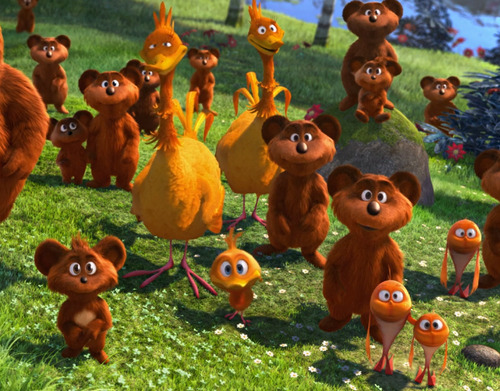
Where Have all the Barbaloots Gone?


"Can't we have the puppy pee on this lawn?" my little son inquired during our morning walk past the neighbor's house. "Look how green it is. Don't they know we're in a drought?"

Indeed, the neighbors lawn fills me with an unreasonable rage. In March of this year the governor of California announced that the state was in one of the worst droughts in history, only to see Californians save a whopping almost no water. After only a 3.6% water conservation for the month of April the government was forced to make water restrictions of 25% per household mandatory, which in our neighborhood also means mandatory restrictions on your outdoor watering to twice weekly or less.

Yet, my lovely neighbor's lawn, filled with the highest quality, fine-bladed, lush and soft Kentucky bluegrass is uniformly the color of water in a deep, still forest pond; the green of a ripe cucumber, watermelon green, the color of life and growth. The grass is so soft and so fine, with nary a tan or yellowed blade amid its luscious carpet, it forces you to imagine squinching your bare toes in it, or laying in it blowing dandelion wishes (if weeds were allowed, which they are not), or braiding daisy chains (if landscaping flowers were allowed to be picked, which they are not). Dr. Seuss must have had grass like this when he wrote of his famous truffula trees, "the touch of their tufts is much softer than silk."

What I'm saying is this lawn did not get nor remain this green by being watered twice a week. 
Image result for truffula tree


My lawn, as of March, is D-E-D dead. My lawn is as dead as the girl in the zombie movie who stops to make love in the peach orchard. My lawn is as dead as any character that you name out loud as your favorite character in Game of Thrones (why, Ned Stark, why? Why did you have to be so noble?). My lawn is an alien threat who, having been warned by Doctor Who to stop whatever they are doing, does not stop whatever they are doing. My lawn is a red-shirted nameless helmsman in a Star Trek away team. Dead, is where I'm going with this. Like so dead it's a little embarrassing. My lawn is the color of a truck stop waitress's hair in Texas.

My lawn when when it was green was getting watered twice a week and still using over 2000 gallons of water a week. In exchange for about $100 a month in water resources it gave me:

  • the satisfaction of driving up to my house twice a day and seeing a green lawn that matched the other green lawns in the neighborhood
  • a soapy chemical runoff that watered the street in front of my house really well
  • the pleasure of playing on my grass no, wait, we never played on the grass
  • the smell of fresh cut grass  no, shoot, not that either since the gardener cut it
  • lots of barefoot front yard barbecues no, front yard parties are not really "done" around here
  • some other stuff...wait...there was something. I feel like there was something though...
Total minutes of joy for the month: 60. So, like $1.60 a minute. I mean, you could have phone sex for that much. I think you can buy a dose of heroin that will jack you up long enough to make that worth it. I'm not sure the joy of driving up to see my green lawn before I pull into the garage twice a day was really that kind of high. 

We told our neighbors we were going to let the lawn die. They all shook their heads at how brave we were. Yep, just the heroes of Mount Suburbia over here, willing to shoulder the badge of shame that comes with a dusty brown lawn. Cancer survivors have nothing on us. I am Khaleesi, Queen of the desert grass.

The only problem was that in March we also start watering the vegetable garden more aggressively, and at the same time we decided to let the lawn die, we had just put in two more raised beds in the front yard. I decided to hand water with a watering can for a week so I could keep track of how much water I used; it came out to 175 gallons a week. In exchange for less than $10 a month in water resources it gave me (well, less, actually, since I saved rainwater that particular month): bowls of blueberries
  • 5 bowls of blueberries 
  • 4 small heads of broccoli
  • 50 snow pea pods
  • 15 handfuls of strawberries
  • 4 heads of spring garlic
  • 3 bouquets of fresh cut roses and scented geraniums
  • the strong and heady fragrance of blossoming lemon trees
  • the exercise of lifting and carrying buckets of water
  • a bunch of fresh air and sunlight
Total minutes of joy: 900. That's a pretty good cost per minute of joy ratio. I can handle that. And it was good joy. Fresh blueberries straight from the bushes and a bunch of vitamin D from a few extra minutes of sunlight the garden forced me to get, AND we not only met our water restrictions mandate of 25%, we exceeded it by reducing 90%? I just might be the smartest girl, in the highest heels.


"And so," said the Lorax, "please pardon my cough,
they cannot live here, so I'm sending them off.
Where will they go?
I don't hopefully know."
Most people are addressing California's water issues by digging out their lawns and replacing them with hardscaping and rock gardens; some, like my Bluegrassian neighbors, ignore water restrictions entirely in favor of flowerless manicured outdoor carpets soaked in as much as three times the chemicals per acre of commercial agriculture. Meanwhile songbirds, butterflies and honeybees are becoming fewer and further between as their search for seeds and flowering plants for food pushes them (and us, by the way) into extinction. They are the Barbaloots, the Swomee Swans, and the Humming Fish that disappeared from the Lorax's Valley.


I propose a third option. A pot of flowers. A hanging tomato plant. A bunch of potatoes sprouting in a bucket. A fruit tree. Instead of wrought iron ivy curling up your fence posts, actual bean and pea plants. Instead of grass, paths between the carrots and strawberries patches. Food, not lawns. Butterflies, not chemicals. Purpose, not picture-perfect. For the water, for the bees, for the topsoil, we just have to do better with the resources we have. And unless someone like you cares a whole awful lot...

"...unless someone like you cares a whole awful lot
Nothing is going to get better. It's not."